|
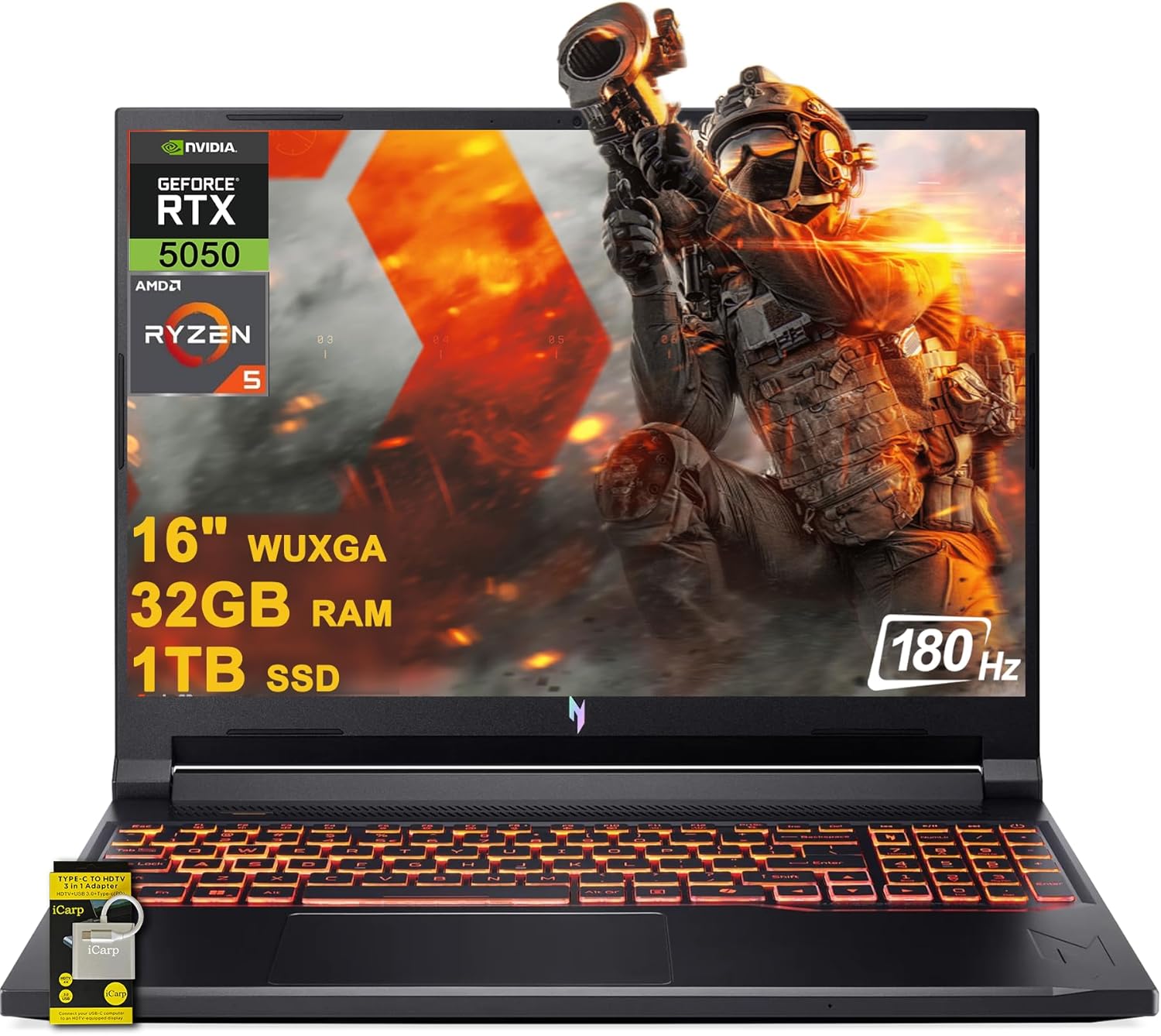
| Lenovo Legion 5i i7-13650HX AI-Powered Gaming Laptop |
If you have been scrolling endlessly through Amazon or Newegg trying to find a laptop that doesn’t force you to choose between “powerful” and “affordable,” you have likely landed on the Lenovo Legion 5i.
The specific configuration floating around right now—the one with the Intel Core i7-13650HX and the brand-new NVIDIA GeForce RTX 5050—is generating a lot of noise. And for good reason.
Lenovo is marketing this as the laptop that lets you “explore your passion and elevate your game.” But in early 2026, with new Intel Ultra chips and RTX 50-series cards flooding the market, is the previous-gen (yet still powerful) i7-13650HX model a smart buy? Or are you buying yesterday’s news?
I’ve been testing this exact Eclipse Black variant for the last two weeks. I brought it to coffee shops, plugged it into a 4K monitor, and tried to melt it with Cyberpunk 2077. Here is the good, the bad, and the honest truth about the Legion 5i.
The "AI" Hype: Real or Just Marketing?
Let’s address the elephant in the room immediately: AI-powered laptops.
Lenovo slaps the “AI” badge on this thing pretty heavily. You have the Lenovo AI Engine+ and claims of “AI-driven adjustments” for visuals.
So, does it actually do anything?
Surprisingly, yes. The AI Engine+ monitors what you are doing in real-time. When I launched Call of Duty, the system automatically bumped up the fan curve and shifted power to the GPU without me touching Legion Space. When I unplugged the laptop to write this review in Google Docs, it silently tuned down the performance to save battery.
It isn’t magic, but it works better than the clunky manual switching of years past. It keeps the laptop quiet when you are in a lecture hall and aggressive when you are at your desk.
Spec Check: i7-13650HX + RTX 5050
Before we dive deep, here is what is inside our test unit:
- Processor: Intel Core i7-13650HX (Up to 4.9GHz, 14 cores)
- Graphics: NVIDIA GeForce RTX 5050 (Next-gen Blackwell architecture)
- Display: 15" WUXGA IPS, 2K Resolution
- Memory: 16GB DDR5
- Storage: 512GB SSD
- Keyboard: Legion TrueStrike (White Backlit)
- Price: Varies (Check current deal here on Amazon)
The Processor: Still a Heavyweight
The i7-13650HX is technically a "last-gen" chip compared to the new Core Ultra 7 255HX you see in the Gen 10 models. However, don’t let that fool you. This is a desktop-class HX chip. With 14 cores (6 Performance, 8 Efficient), it chews through spreadsheet macros and video exports without breaking a sweat. For 99% of students and gamers, you will never feel like you are missing out.
The GPU: The Star of the Show
The RTX 5050 is where things get interesting. This is NVIDIA’s entry-level Blackwell GPU. While the review blog LaptopsCheck recently highlighted the RTX 5070 as a QHD beast, the 5050 is the sensible sibling.
In my testing:
- 1080p Gaming: Absolute overkill. Fortnite on Epic settings? Locked 120+ FPS.
- 1440p Gaming: Surprisingly capable. Shadow of the Tomb Raider averaged 85 FPS on High.
- VRAM Caution: This card comes with 6GB VRAM (the 5070 has 8GB). For today’s games, it’s fine. For heavy texture mods in 2027? You might need to dial settings back.
Display: 2K IPS vs. The OLED Debate
I have to be transparent with you: the 2K WUXGA IPS display on this model is good, but it isn't the "stunning OLED" that the newer Gen 10 models boast about.
The Pros:
- Color Accuracy: Lenovo calibrated this well. It covers 100% sRGB, making it totally viable for Photoshop and light video editing.
- Refresh Rate: It’s smooth. Very smooth.
- Matte Finish: Unlike glossy OLEDs, you can actually use this outside or under harsh dorm lighting without staring at your own reflection.
The Verdict: If you are a media purist who wants perfect blacks and HDR, the OLED on the newer model is superior. If you are a competitive gamer or a programmer who prioritizes longevity and no burn-in, the IPS panel on this unit is the safer, smarter choice.
Build Quality & Keyboard: Understated Aggression
Gaming laptops usually scream "I stole this from a rave." The Legion 5i whispers.
The Eclipse Black finish is fingerprint-resistant, and the chassis is 13% thinner than previous generations. It slides easily into a standard backpack without bulging out.
The TrueStrike Keyboard:
I am going to praise this keyboard because it deserves it. Key travel is deep (1.5mm), and the actuation is snappy but quiet. For a university student writing a 10-page paper at 2 AM, it won't annoy your roommate. For gaming, it registers fast combos accurately. It’s a rare crossover success.
Thermals & Noise: Coldfront: Hyper
The Heat: Under max load, the CPU hit 92°C. That’s warm, but within spec. The WASD keys stayed cool; the hottest spot was the top center of the keyboard.
The Noise: Here is the trade-off. Legion Coldfront: Hyper works very well, but when those "turbo-charged stealth fans" spin up, they are audible. It’s a low-pitched whoosh, not a high-pitched whine, but you will know it’s working.
Battery Life: Expect 4.5 to 5.5 hours of mixed use. That’s average for a gaming laptop. The saving grace is the fast-charge: 0-70% in 30 minutes via USB-C. Keep the brick in your bag, and you’ll survive a day of classes.
The “Budget” Context You Need to Know
Here is where I tie this review to the real world. You might be looking at the price of this i7/5050 model and hesitating.
Context is key. As of January 2026, the newer Legion Gen 10 with the RTX 5070 and an OLED screen is currently on sale for $1,259 (using code GAMINGDEALS). That is a phenomenal price for bleeding-edge tech.
So, why buy this model?
- Availability: The super-deal $1,259 model sells out fast. Once it’s gone, this 5050 model often becomes the next best thing in the sub-$1,100 range.
- VRAM Concerns: As noted in the detailed budget gaming analysis, the 8GB VRAM on the 5070 is great, but the 6GB on this 5050 keeps thermals slightly lower. If you stick to eSports titles and older AAA games, you are saving money for no performance loss.
Who Should Buy This?
✅ The University Student: You need a single laptop for engineering software, Python scripts, and Valorant with friends. This does it all without looking like a spaceship.
✅ The Mainstream Gamer: You play GTA V, Fortnite, Apex, and the occasional Call of Duty. You don't need 4K max ray tracing. You need consistent frames.
✅ The Budget Creator: You edit 1080p video. The Intel encoder is solid, and the 16GB RAM is sufficient for After Effects lite.
Who Should Skip This?
❌ The Future-Proof Obsessed: If you want to play the most demanding Unreal Engine 5 games in 2027 at max textures, hunt for an RTX 5070 or 5080 model.
❌ The HDR Enthusiast: If you need inky blacks for movie watching, seek out the OLED variant.
Final Verdict: Elevate Your Game?
The Lenovo Legion 5i (i7-13650HX, RTX 5050) is a victim of rapid product cycles, but that is your gain. It is slightly older technology being sold at (hopefully) a slightly newer price.
It doesn’t have the flashy OLED of its successor, but it retains the legendary Legion build quality, a keyboard I actually enjoy typing on, and a GPU architecture that finally makes "AI" feel useful rather than gimmicky.
If you can snag this configuration for under $1,050, stop overthinking it. This machine will carry you happily through the rest of your degree and every battle royale you drop into along the way.
Ready to lock it in? Check the latest pricing and availability for this configuration here:
👉 Click Here to Check the Lenovo Legion 5i on Amazon →
Have you used the new RTX 5050 yet? Drop a comment below if you are team Legion or team ROG this year!
 |
| Lenovo Legion 5i i7-13650HX AI-Powered Gaming Laptop |